Rewilding areas of the Greater Côa Valley

0
Price
From€470€470
Booking Form
Enquiry Form
Full Name*
Email Address*
Your Enquiry*
* I agree with Terms of Service and Privacy Statement.
Please agree to all the terms and conditions before proceeding to the next step
* Please select all required fields to proceed to the next step.

Proceed Booking

Save To Wish List

Adding item to wishlist requires an account

5
2 days, 2 nights
Largo da Praça, Portugal

REWILDING AREAS OF THE GREATER CÔA VALLEY

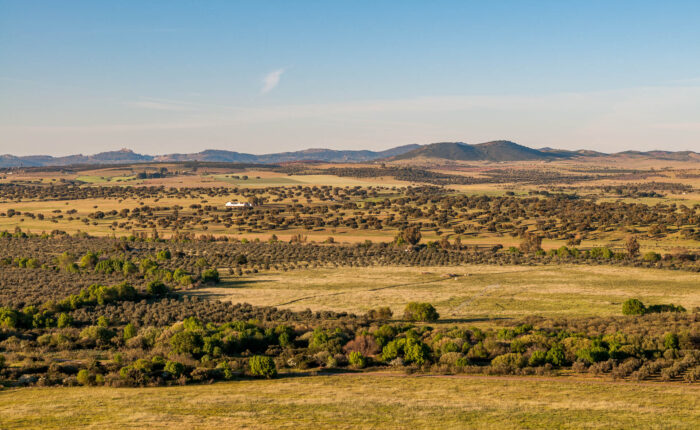
In parallel with the incredible natural values of the region, the Greater Côa Valley represents a unique opportunity to apply the principles of rewilding in the region due to the high levels of rural abandonment.
This opportunity can be exploited by taking a large-scale perspective of the landscape, working to improve connectivity between natural areas and, at the same time, supporting sustainable business models in the region that can stimulate local economies and bring additional value to communities in the area. Rewilding Portugal is managing 3 areas in the Greater Côa Valley, under the conservation principles of rewilding. 

This 2-day tour includes a visit to the Greater Côa Valley and the rewilding areas.

Available for 1 to 8 participants.

Program subject to prior confirmation.

The program can be adapted to include more nights and more activities, but prior consultation is necessary to obtain a quote and check availability.
TECHNICAL SHEET

Day 1

On this first day, you will arrive in Vilar Maior at the end of the day to check in at the local accommodation and, at the end of the day, at dinner, we will explain the programme.

Day 2

In the morning, we’ll visit the rewilding area of Paul de Toirões. This place is located on the Beira plateau, close to the Spanish border, and is a key area for landscape connectivity in the Greater Côa Valley, a corridor and refuge for wildlife. Paul de Toirões was a former mining operation that ceased its activity more than a decade ago. Fed by the Tourões stream, it forms one of the largest areas of water in the entire Côa Valley, with a wide variety of environments such as ponds, channels, permanent and temporary lagoons. These are interconnected by seasonally flooded wetlands full of aquatic and riparian vegetation that grows over the former tungsten and aggregate extraction areas. Around all this water, there is an abundance of willow woods, some areas of reed beds, as well as a young but extensive forest, mainly made up of pyrenean oak (Quercus pyrenaica) and holm oak (Quercus rotundifolia).

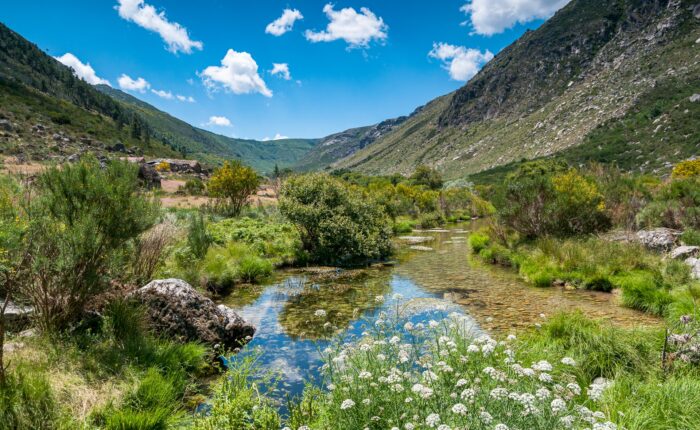
At lunchtime we’ll have our picnic and then head to the rewilding area of Vale Carapito. Crossed by the Cesarão River, a small tributary of the Côa River, this valley contains natural values that are characteristic of the area. The riverside gallery of ash trees crosses meadows where some cattle and roe deer still graze. The slopes are covered in pyrenean oak forests. Numerous species of birds can be seen along the route. Dragonflies and Mediterranean terrapins take refuge in the water corridor and various species of butterflies hover over the flowery meadows. Complementing the rich natural heritage is the history and built heritage of Vilar Maior, with the 13th century castle standing out at its highest point.

Day 3

On this day, we will visit Ermo das Águias rewilding area, which is located roughly halfway along the course of the River Côa, on a steep slope on the left bank, where the landscape of the river valley is marked by crags and rugged cliffs. The opposite slope, however, has a significant area of cork oak (Quercus suber). Despite a history of intense land use, the process of renaturalisation of the pyrenean oak (Quercus pyrenaica) forests and their association with holm oaks and cork oaks is already evident. The meadows are gradually recovering their floristic diversity, which is attracting a greater number of insects, rabbits and partridges. This rewilding area is located 2 kilometres from the village of Vale de Madeira (Pinhel). From the village, we take a rural path that descends to the Gaiteiros stream, where the entrance to Ermo das Águias is located. In this area, there are several alternative walking routes to explore this natural area during the morning. At lunchtime, we’ll head to the banks of the Côa River where we’ll enjoy our tasty picnic. Then we return to Vilar Maior and end the programme.

WHAT’S INCLUDED

  • 2 nights in a double room, breakfast included, in a rural tourism house;
  • 2 dinners;
  • 2 picnic lunches;
  • Tour guide;
  • All permits;
  • Nature conservation contribution fee;
  • Local transport;
  • Insurance.

WHAT’S NOT INCLUDED

  • Others not specified.

HIGHLIGHTS

  • Rewilding areas
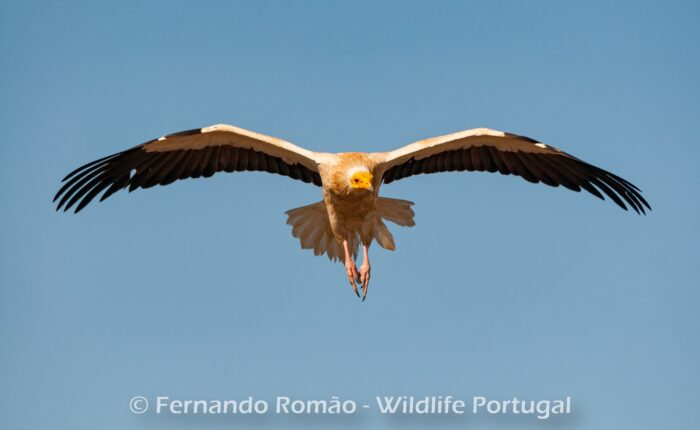
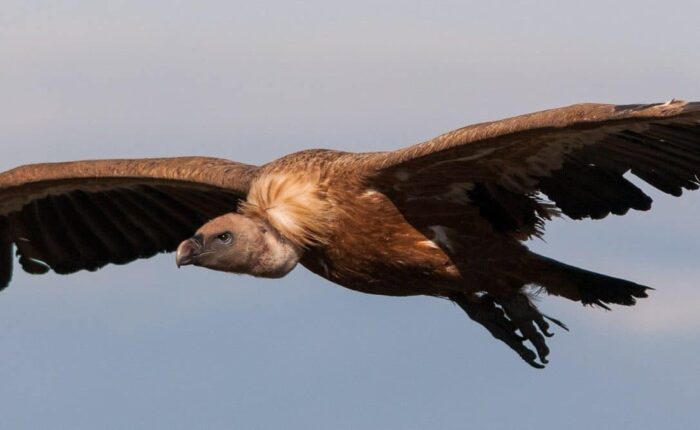
  • Great diversity of birds
  • Endemic fauna and flora
  • Primitive breed of indigenous horses
  • The Taurus wild bovine

FREQUENTLY ASKED QUESTIONS

How is this activity carried out?

The itinerary through the region is by car, but there are several stops planned to explore short walking routes.

Single-use plastics

In our activities, we promote the non-use of single-use plastics. This way, we recommend our clients to bring their own canteen for water.

Dietary restrictions

In case of food intolerance, or other dietary preferences, we are happy to adapt the meals accordingly, but we’d ask you to let us know in advance.

What to wear?

This activity requires comfortable footwear (preferably mountain boots or trainers), clothing adapted to the season and the weather forecast.

Smoking

In dry weather, it is very dangerous to smoke in the countryside. We ask that you only smoke at the end of the activity. And do not throw cigarette butts on the ground.